Tag: Worship

  • Music Musings – Vol. 60, No. 12

    Heavy Hearts

    Our hearts are heavy with the events of the past couple of weeks: the violence, riots, the hatred, the bigotry. It seems that hate is growing stronger and some are developing a numbness to it.

    Now is the time to let God’s love shine through us as we make choices to love instead of hate and stand up against injustice instead of sitting on the sidelines. It is time to love without an agenda, advocate for those who need it and forgive as we are forgiven.

    The following excerpt from a writing attributed to St. Francis of Assisi is an exemplary prayer for peace. May this be our prayer today.

    Lord, make me an

    instrument of your peace.

    Where there is hatred,

    Let me sow love.

    Where there is injury, pardon;

    Where there is doubt, faith;

    Where there is despair, hope;

    Where there is darkness, light.

    Where there is sadness, joy.


    O Divine Master,

    Grant that I may not so much seek

    To be consoled as to console;

    To be understood as to understand;

    To be loved as to love.


    For it is in giving that we receive;

    It is in pardoning that we are pardoned;

    And it is in dying that we are born to eternal life.


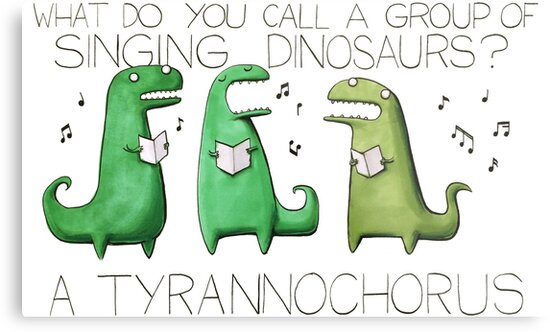
    And now on a lighter note…

  • Music Musings – Vol. 60, No. 11

    Summer Concerts

    As you may have guessed, our summer concerts have taken a hit this year with the stay-at-home order. We had originally scheduled four concert events this year and planned to be spread out over the summer (one each month) rather than having consecutive weekly events. That being said – our May and June concerts have been canceled. However, we have The Lesters concert scheduled for July 26, and Timothy and Hosanna Noble are set to be here on August 9. We will proceed with these plans with the realization that proper precautions will be in place for each event. All safety recommendations for attendees will be set as we come closer to the concert dates.

    Singing

    To sing or NOT to sing. As we are coming to grips with the issue of singing during this pandemic, we have become aware of the endangerment this activity can have on both producers and consumers.  We will work throughout this unusual season of time to protect everyone from existing dangers.

    An old Walt Whitman poem came to my mind while thinking about the luxury of singing. Though I feel unqualified to analyze the message, I love that this poet chose to use the idea of “songs” and “singing” to depict various characters singing their own “songs,” blending together in one unifying chorus that is America in his poem I Hear America Singing.

    I hear America singing, the varied carols I hear.

    Those of mechanics, each one singing his as it should be

    blithe and strong.

    The carpenter singing his as he measures his plank or beam.

    The mason singing his as he makes ready for work,

    or leaves off work.

    The boatman singing what belongs to him in his boat,

    The deckhand singing on the steamboat deck.

    The shoemaker singing as he sits on his bench,

    The hatter singing as he stands,

    The wood-cutter’s song,

    the ploughboy’s on his way in the morning,

    or at noon intermission or at sundown,

    This delicious singing of the mother,

    or the young wife at work, or the girl sewing or washing,

    Each singing what belongs to him or her and to none else,

    The day what belongs to the day –

    at night the party of young fellows, robust, friendly,

    Singing with open mouths their strong melodious songs.

  • Music Musings – Vol. 60, No. 10

    Did You Know…

    Many of our popular hymns have interesting backstories.

    The song I Know Whom I Have Believed was written by a Union soldier during the Civil War, who was held as a prisoner of war and became a believer while praying for another dying soldier.

    Hymn writer Fanny Crosby was blind from infancy yet was able to memorize the first five books of the Bible, the four Gospels, the Proverbs, and most of the Psalms.

    But one song in particular, of which many of us have grown to adore, has an inspiring origin.

    Carl Boberg, a newspaper editor, and member of the Swedish Parliament, being inspired by the sound of church bells ringing during a wild thunderstorm, penned the poem, O Great God. When O Great God was published, the poem did not catch on and it seemed destined to be forgotten. However, three years later someone liked it enough to match the words with a Swedish melody. Boberg published the poem again in 1891 – this time in the form of a song.

    A few decades later in the 1930s, English missionary Stuart Hine heard the song while in Poland. He was deeply moved, translated the song to English and took it home with him to England. In English, the song was now called How Great Thou Art. 

    Moving on to the 1940s, an evangelist heard this song being sung by native tribal people in India, of all places! The evangelist, Dr. Edwin Orr, was deeply inspired and brought the song to the United States. In 1954 the song found its way into the hands of George Beverly Shea, who sang it over 100 times in Billy Graham’s 1957 New York crusade. In 1959 it became the theme song for Billy Graham’s weekly radio broadcast.

    The song later became recognized by ASCAP (American Society of Composers, Authors and Publishers) as “The All-Time Outstanding Gospel Song” in America. How Great Thou Art has consistently been listed as one of the greatest hymns ever written, usually falling in second place right behind Amazing Grace, and has been recorded over 1,800 times in the last 50 years. Many of you have no doubt heard the recordings by Elvis Presley and it was also recorded in 2017 by popular country artist Alan Jackson.

    How astonishing that this song started as a poem in a small Swedish town and somehow wound its way around the globe to become a great hymn of the faith.

  • Music Musings – Vol. 60, No. 09

    Shigionoth – A Musical Term

    Forms of this word appear two times in the Bible.  The singular form of the word is shiggaiom appearing in Psalm 7.  The plural form of the word, shiginoth, is found in Habakkuk 3:1.

    In each case the words are associated with songs and seem to indicate the passionate and strong emotional manner in which the song is to be sung. Both songs paint a picture of dire trouble. Habakkuk 3 speaks of earthquakes, crumbling mountains, pestilence, floods, arrows, spears, and calamity. The song in Psalm 7 describes vicious lions, trampled lives, rage, swords, flaming arrows, and violence. Both songs end with exuberant praise to the Lord for His deliverance from the troubles.

    It is unlikely that I will ever encounter shiginoth or shiggaiom as a directive in a musical composition, however my guess is the Italian directives conpassione or appasionato will get the same point across.

  • Music Musings – Vol. 60, No. 07

    Hold Me Jesus

    Christian songwriter Rich Mullins is certainly best known for writing the praise songs Awesome God and Step By Step. However, I would like to share the lyrics of a song he wrote in 1993 called Hold Me Jesus. Some of you may remember this song was recorded more recently (2008), by Big Daddy Weave.

    It seems to me this song would be very appropriate during this time of fear and anxiety:

    Well, sometimes my life just don’t make sense at all

    When the mountains look so big

    And my faith just seems so small


    So hold me Jesus, ’cause I’m shaking like a leaf

    You have been King of my glory

    Won’t You be my Prince of Peace


    And I wake up in the night and feel the dark

    It’s so hot inside my soul

    I swear there must be blisters on my heart


    So hold me Jesus, ’cause I’m shaking like a leaf

    You have been King of my glory

    Won’t you be my Prince of Peace


    Surrender don’t come natural to me

    I’d rather fight You for something I don’t really want

    Then to take what You give that I need

    And I’ve beat my head against so many walls

    Now I’m falling down, I’m falling on my knees


    And this Salvation Army band is playing this hymn

    And Your grace rings out so deep

    It makes my resistance seem so thin


    I’m singing hold me Jesus, ’cause I’m shaking like a leaf

    You have been King of my glory

    Won’t you be my Prince of Peace

    What an insight into the human condition! Bending our will to the will of the Father is an issue for all of us. The Good News is that since Christ did just that on our behalf, we can be transformed from children of wrath to obedient sons and daughters who cry, “Abba Father.” If you are feeling weak and unsure of everything right now, simply cry out “Hold me, Jesus,” and He will do just that.

  • Music Musings – Vol. 60, No. 06

    Praise and Worship Activities for Kids

    Here are some ideas for activities that may fit with worshiping at home during this time of precaution. Enjoy praising God with your kids and create lasting memories in the midst of these trying times.

    Music

    Music is certainly one way a child can worship God.  Read the story of Paul and Silas in Acts 16:25. Even though Paul and Silas were in prison, they still sang songs of praise to God. Point out how songs of praise can lift the spirit no matter what may be going on in our lives. Sing songs with your child. Think of songs you may have sung as a child, (e.g. Deep and Wide, This Little Light of Mine, Jesus Loves Me).

    Dance

    One of King David’s ways of worshiping was dancing. Read the children 2 Samuel 6:14, which talks about David dancing before God as the Ark of the Covenant was brought into the city. Play some upbeat praise songs and dance around. To enhance the experience give the kids a piece of ribbon attached to the top of a stick to wave around as they dance.

    Instruments

    King David not only sang and danced when worshiping and praising God, he also played music. Create a few instruments out of household items. To make a kazoo, give each child a toilet paper tube (which you undoubtedly have, haha!), a piece of wax paper, a rubber band, and a pencil. Place the wax paper over one of the open ends of the toilet paper roll and hold it in place by sliding a rubber band over it. Finish the kazoo by poking a few small holes in the wax paper with the point of the pencil. Blowing in the open end will create music. Make a praise shaker out of two paper plates and a handful of beans, rice or popcorn kernels. Turn the second plate upside down over top of the first. Staple the edges or use tape to secure the plates together.  Shake while dancing and/or singing!

  • Music Musings – Vol. 60, No. 05

    The Place of Music in Worship

    The people of God sing. The role of music in worship is Biblical. After escaping from the Egyptians and crossing the Red Sea, the people of Israel sang a song to the Lord (Exodus 15). Singing was part of Israel’s formal worship in both tabernacle and temple (1 Chronicles 6:31-32, 16:42). The Psalms bear rich testimony that in joy and sorrow, in praise and lament, the faithful raise their voices to God in song. Hymn singing was practiced by Jesus and His disciples (Matthew 26:30). The Apostle Paul instructed the Colossians to sing “…psalms, hymns, and spiritual songs to God.”

    A Hymn of Confidence and Faith

    Our choir will soon be worshipping with a modern hymn, By Faith, paired with the old hymn, Great is Thy Faithfulness, written in 1923 by Thomas Chisolm. By Faith was written in 2009 by Keith and Kristen Getty and Stuart Townend. Inspired by Hebrews 11, the message of this song shows how believers today are traveling the same journey of faith as those who’ve walked before us. In writing modern hymns, the Getty’s consider a musical vocabulary that might link generations rather than separating them.

    It Can’t Be Said Too Many Times

    We can always use more singers in our Friendship Choir. This ministry will afford you the opportunity to brighten days and share the love of Christ with a most appreciative audience. We are currently planning a trip in April to visit the Baptist Home in Ironton.  We also seek to schedule visits to facilities that house our members. You will find this time-honored statement true: “it is in giving that we receive.”  You are sure to be blessed.


  • Music Musings – Vol. 60, No. 01

    The Fine Art of Whistling

    Professional Whistling: It’s really a thing. Molly Lewis, considered to be the world’s best whistler, was asked what she did to prepare for competition. Her reply was, “Always stay hydrated and NEVER forget your Chapstick.”

    The salary for professional whistlers: average annual salary $77,292; if you are a virtuoso – $155,628. You may have watched the New York Philharmonic on New Year’s Eve and noticed a professional whistler on one of the Sondheim pieces. I wonder what her salary was.

    Whistling as a Language: Did you know there is a Turkish village where whistling is a means for communication? They communicate numbers and words using a language referred to as “bird language” with the other villagers delivering the news of the day.

    In some worship settings (not Fee Fee), people have been heard whistling during worship. I recently read an article which cited scripture reference to the Holy Spirit whistling.

    Zechariah 10:8 – 9 says, “I will whistle for them and gather them, for I will redeem them: And they shall increase as they once increased. I will sow them among the peoples, and they shall remember Me in far countries; they shall live, together with their children, and they shall return.”

    And in Isaiah 5:26 it shows us this phenomenon in all its glory, “He will lift up a banner to the nations from afar, and will whistle to them from the end of the earth; surely they will come with speed, swiftly.” Let’s allow the Holy Spirit to whistle and call for the harvest through us!


    One Day

    This is an old hymn written by Dr. John Wilbur Chapman, a noted evangelist in the late 19th century.

    In the hymn, One Day, Dr. Chapman chose 4 key events in the life of Christ to highlight.

    • Verse 1 – Jesus’ birth
    • Verses 2 and 3 – Christ on the cross and His burial
    • Verse 4 – The resurrection
    • Verse 5 – The triumphant return of Christ

    The group Casting Crowns rebirthed this song in 2009 and called it Glorious Day. The hymn, One Day, had been a favorite of Mark Hall from this group. He loved it as a child and chose to write his version to share the entire Gospel message just as the original hymn. Glorious Day ranked at the top Billboard spot of Hot Christian Songs for a total of nine weeks in 2011.

    We sang the original hymn, One Day, in 8:30 a.m. worship on January 12. What do you think? How do the two versions compare in their style and continued message?
  • Music Musings – Vol. 59, No. 26

    Year-end is a powerful time of celebrating and gathering, a time for reflection, and a time for looking forward. This year at Fee Fee we review our accomplishments with a deep sense of gratitude to so many who have contributed to the mission and ministry of music in our church.

    This year more than ever, we have been able to schedule worship music to make a greater impact on our worship services based on scripture. Advanced planning has increased the excellence of our gifts.

    Our choir prepared a special music presentation, Closer to the Cross, for Palm Sunday.  This piece celebrating the Journey of Christ paved the way for a triumphant Easter Sunday.

    Our Summer Concert series is presented each year as a gift to our community.  It is increasingly well attended, drawing in more than 800 people over the five weeks in July. In 2019, we featured familiar favorites: The Lesters, The Harris Trio, The Assurance Quartet, Timothy Noble, and Erica Lyles. As always, each concert attracts different audiences with varied musical tastes.

    The Friendship Choir attracts members who have a heart for sharing the love of music and the rich message of God’s love, especially with those who are unable to get out. One of the highlights of our season was our trip to the Baptist Home in Ironton. It was delightful to visit with old Fee Fee friends and share our music program.

    Last, but certainly not least was our traditional Singing Tree program. This year our Tree Singers were a multigenerational group ranging in ages from 11 years to Octogenarians. Our music was a little different this year bringing in a unique Celtic style called, Have You Heard. We always love the involvement of children in the Children’s Nativity.  All the characters are represented along with various animals and even an angel and a star! This year more than 1,300 people were in attendance over the three performance times.

    This was just some idea of the activities our music department took part in this past year. Maybe you could find a way to join us in 2020. You would be warmly welcomed!